MercoPress. South Atlantic News Agency
Economy
-
Wednesday, October 31st 2018 - 09:01 UTC
Several Army generals expected in Bolsonaro's cabinet to be announced next Monday

Brazil’s far-right president-elect, Jair Bolsonaro, is likely to tap army generals and an ultra-free-market economist for key roles in his cabinet. The former army captain styles himself as an outsider, even though he has spent a long career in Congress, and has mostly sought prospective ministers with little political experience.
-
Wednesday, October 31st 2018 - 08:52 UTC
Beijing concerned a weaker Yuan could further trigger trade war with the U.S.

The Chinese Yuan weakened to a decade low on Tuesday on concerns over China's slowing economy and the US trade war, but Beijing was expected to prevent it breaking the psychologically important 7 Yuan per dollar barrier. The Yuan drifted past 6.96 to the dollar, hitting its weakest levels since May 2008.
-
Wednesday, October 31st 2018 - 08:43 UTC
Brazil's unemployment down to 11.9% in the third quarter
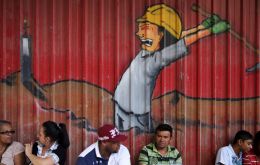
Brazil's unemployment rate fell for the sixth straight month in September, according to government data released on Tuesday, two days after far-right congressman Jair Bolsonaro was elected president on a promise of sweeping change. The jobless rate -- measured in sliding three-month intervals -- was 11.9% for the period from July to September, down from 12.1% from June to August.
-
Wednesday, October 31st 2018 - 08:23 UTC
Argentina resumes natural gas export to Chile after twelve years

Argentina has begun exporting natural gas to Chile after a 12 year interlude, Chilean President Sebastian Piñera said on Tuesday, as the two neighboring countries seek to increasingly integrate their energy supply and electricity grids.
-
Tuesday, October 30th 2018 - 17:14 UTC
Bolivia's YPFB must be more competitive to negotiate gas with Brazil

Yacimientos Petrolíferos Fiscales Bolivianos (YPFB) needs to lay out a more competitive plan in terms of prices and delivery methods if it is to negotiate the sale of gas to private Brazilian companies in an adverse political context, according to former minister and hydrocarbons specialist Álvaro Ríos.
-
Tuesday, October 30th 2018 - 08:50 UTC
Future economy minister says Mercosur not a priority for Bolsonaro's Brazil
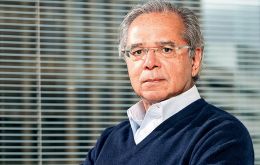
Mercosur is not a priority, and Argentina is not a priority for the new government of Brazil, the priority is to trade with all the world. The strong statement came from Paulo Guedes, signaled as the next Finance minister of president elect Jair Bolsonaro's cabinet and a crucial player in that team since the newly elected leader has admitted a limited knowledge of economics.
-
Tuesday, October 30th 2018 - 08:45 UTC
YPF plans US$ 4bn annual investment in oil and gas production

Argentina's state-controlled oil company, YPF, will significantly boost oil and gas production, investing between US$4 and US$ 5 billion per year through 2022, Chief Executive Daniel Gonzalez said. The plan is to raise production by between 5and 7% per year, with the largest increase in the Vaca Muerta formation, one of the world's largest reserves of shale oil and gas.
-
Tuesday, October 30th 2018 - 08:40 UTC
UK Budget time: “Austerity coming to an end” announces Chancellor Hammond

Chancellor of the Exchequer Philip Hammond has said the “era of austerity is finally coming to an end”, in his last Budget before Brexit. He spent a windfall from better public finances on more money for universal credit and bringing forward planned income tax cuts by a year.
-
Sunday, October 28th 2018 - 18:00 UTC
Fitch cautious about UK as no-deal Brexit scenario looks inevitable

The increased likelihood of a no-deal Brexit scenario has led ratings agency Fitch to envision serious damages to the United Kingdom's economy for future assessments, although it maintained Britain's long-term AA grade... For now.
-
Sunday, October 28th 2018 - 16:55 UTC
Last minute polls confirm Bolsonaro will be Brazil's next elected president

The ultra right candidate Jair Bolsonaro continued ahead of Fernando Haddad in the runoff for the Brazilian presidency scheduled to take place this Sunday, 28 October. According to the latest public opinion poll, released late Saturday, the ex Army captain and paratrooper had a 54% of valid votes support while the Workers Party hopeful stood at 46%, that is an eight points difference.