MercoPress. South Atlantic News Agency
Economy
-
Wednesday, April 5th 2017 - 06:32 UTC
S&P raised Argentina's credit rating to “B”, on the “verge of exiting recession”
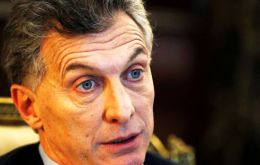
Standard & Poor's raised Argentina's credit rating one notch Tuesday, from B- to B, saying Latin America's third-largest economy was on the verge of exiting recession.The rating bump gives a boost to conservative President Mauricio Macri, who has launched sweeping - often unpopular - economic reforms aimed at reviving growth.
-
Wednesday, April 5th 2017 - 06:22 UTC
IDB ends annual meeting with agreement to replenish innovation fund
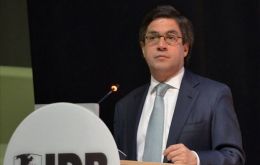
The Inter-American Development Bank and the Inter-American Investment Corporation wrapped up the annual meeting of their Boards of Governors after reaching an agreement to replenish the Multilateral Investment Fund (MIF), the IDB Group’s innovation lab.
-
Wednesday, April 5th 2017 - 06:08 UTC
Falkland Islands Government appoints Financial Secretary

The Falkland Islands Government has announced the appointment of James Wilson as its Financial Secretary. After a short handover period with Lydia Morrison - who is currently the Interim Financial Secretary - he will formally take up his role on 1 June 2017.
-
Wednesday, April 5th 2017 - 05:49 UTC
Chile's annual resources' report shows nine fisheries are depleted or collapsed
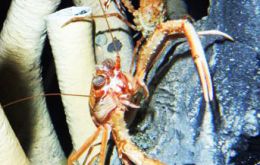
The latest annual report from Chile's Fisheries administration, “Public Account of Resources Status 2016” indicates that of the 43 existing fisheries, 25 have biological reference points (PBR) which means a precautionary approach. The presentation was made by Paolo Trejo, Under Secretary for Fisheries and Aquaculture.
-
Tuesday, April 4th 2017 - 09:55 UTC
Maduro gained his true objective: sweeping authority to cut oil deals on behalf of PDVSA
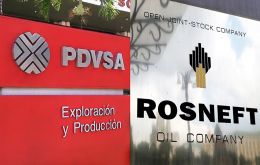
Venezuelan Supreme Court reversal decision to take over the opposition-led congress seems to have yielded to domestic and international pressure, but it still gives embattled populist President Nicolas Maduro broad new powers over the country´s vast oil wealth, which now appears to have been his true target.
-
Tuesday, April 4th 2017 - 09:50 UTC
Torrential rains and mudslides destroy “80% of Comodoro Rivadavia”
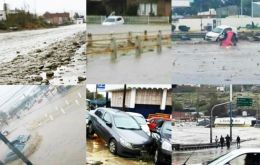
Comodoro Rivadavia, in Argentine Patagonia, also known as the “Oil capital” of the country is estimated to have experienced an “80% destruction” of the city, according to a first report from an Army engineers' battalion sent to set up bridges and repair highways. The city suffered a week of historic torrential rains (330mm) and strong winds with flooding, mudslides which swept away with bridges and tracts of roads and major highways.
-
Tuesday, April 4th 2017 - 07:32 UTC
Trump administration begins to cut UN funding: UNFPA first target
United States has withdrawn funding for the United Nations Population Fund (UNFPA), an agency that promotes family planning in more than 150 countries. The state department said the UNFPA “supports or participates in the management of a program of coercive abortion or involuntary sterilization”.
-
Monday, April 3rd 2017 - 13:52 UTC
Brazil rapidly becoming global supplier of light crudes
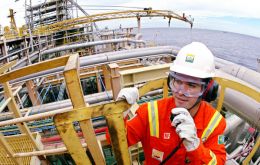
Brazil is poised to sharply increase oil exports this year as heavy investments spur new output and demand for its lighter crudes win more buyers, especially in China and India. Production is projected to rise 210,000 barrels per day (bpd) in 2017, second only in the size of additional supply to the United States among non-OPEC producers.
-
Monday, April 3rd 2017 - 13:39 UTC
Mexico planning to purchase Brazilian rice ahead of a clash with Trump over a Nafta review
A move announced recently by Mexican diplomats may be a precursor of what could be happening in the coming months with the trading of major commodities involving the country’s trade war talks with the U.S.
-
Monday, April 3rd 2017 - 13:27 UTC
Irish farmers want meat removed from Mercosur/EU trade talks
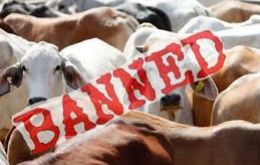
The Irish Farmers’ Association (IFA) is pushing to have meat removed from the proposed trade deal between Europe and Mercosur in the wake of Brazil’s meat scandal. The move could scupper the entire trade deal given the importance of the meat industry to Brazil, Argentina, Uruguay and Paraguay.