MercoPress. South Atlantic News Agency
Economy
-
Tuesday, November 22nd 2016 - 09:00 UTC
Santander bank confident of Brazil's “rapid recovery”
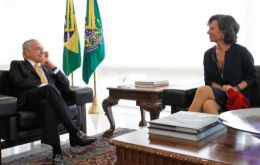
President Michel Temer met on Monday with Banco Santander chairman Ana Botin, who expressed the Spanish banking giant's confidence in Brazil's economic future despite the current downturn being experienced by Latin America's largest economy.
-
Monday, November 21st 2016 - 12:15 UTC
APEC summit criticizes protectionism and consider Asia-Pacific free trade area
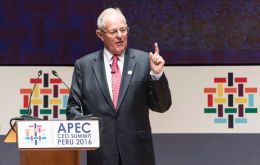
Peruvian President Pedro Pablo Kuczynski brought the Asia-Pacific Economic Cooperation summit to a close in Lima on Sunday with a message against protectionism and awareness that the meeting was held “at a key moment in the world's economic history.”
-
Monday, November 21st 2016 - 11:22 UTC
Nobody is going to invest in Argentina while fearing populism could be round the corner
Even admitting that the Argentine economy will expand 3% next year, nobody wants to invest in the country because they are not sure that populism won't be back in a couple of years, according to economist and former central bank chair Javier Gonzalez Fraga.
-
Saturday, November 19th 2016 - 20:27 UTC
Robots and “reshoring” threaten millions of jobs in developing countries

The increased use of robots threatens millions of jobs in developing countries, by undermining the advantage of low wages and facilitating the “reshoring” of industries back to industrialized countries, according to a new policy brief from UNCTAD.
-
Saturday, November 19th 2016 - 18:39 UTC
Buenos Aires admits poor cruise season because of past mistakes

Buenos Aires cruise season has taken off but it will be far from its peak in 2012/13 when over half a million visitors reached the Argentine capital. This season will only see 81 calls with 323.000 visitors of which 70% foreigners, according to local port authorities.
-
Saturday, November 19th 2016 - 08:52 UTC
Fuel shortages feared in Uruguay due to lorry drivers' strike

The lorry drivers' strike already under way in Uruguay, which broke up as a conflict between freight carriers and the agriculture sectors, may have its impact on the distribution of car petrol, warns Mauro Borzzaconi of the trucking association.
-
Friday, November 18th 2016 - 11:47 UTC
Uruguay with IDB support plans to invest US$600 million in rural roads network

Uruguay plans to improve the rural roads network of the 18 department governments with support from two credit lines for an investment project totalling US$600 million with two initial loans completing US$150 million from the Inter-American Development Bank (IDB). The funds will support the implementation of rural roads construction in agriculture production areas, and will also be geared to improve and strengthen fiscal management and services at the departmental government level.
-
Friday, November 18th 2016 - 11:42 UTC
Latin American exports downward trend is greater than in the rest of the world
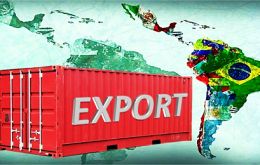
Following two years in a downward trend the value of Latin American exports fell 14.8% in 2015, and 8.5% in the first seven months of 2016, according to the Trade and Integration Monitor 2016 of the Inter-American Development Bank. Services exports, which had partially compensated the fall in merchandise trade in previous years, contracted 2.4% in 2015, the first time since the 2009 financial crisis.
-
Friday, November 18th 2016 - 09:36 UTC
Argentina and Canada allies in supporting free trade and combating protectionism
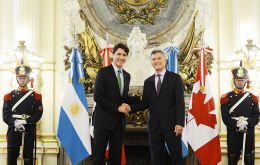
Argentine president Mauricio Macri and Canadian Prime Minister Justin Trudeau took direct aim on Thursday at the walls of protectionism set to be erected around the United States, saying that freer trade is the best way to pull their countries out of economic uncertainty. The two leaders said there is real anxiety that progress and global trade have resulted in people being left behind or children being robbed of the same opportunities afforded their parents and grandparents.
-
Friday, November 18th 2016 - 09:15 UTC
Yellen intends to remain her four-year term; anticipates rate increase “relatively soon”
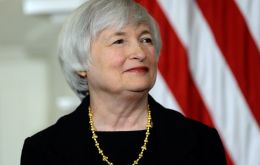
The United States Federal Reserve chair Janet Yellen told Congress on Thursday that she is not stepping down. Her statement follows on strong attacks during the campaign from president elect Donald Trump who claimed the Fed was favoring president Barack Obama and candidate Hillary Clinton with its low interest rate policy.

