MercoPress. South Atlantic News Agency
Economy
-
Friday, March 4th 2016 - 07:17 UTC
Brazilian GDP contracted 3.8% in 2015, the worst among major economies
Brazil's GDP fared worse than almost any other major economy in 2015, contracting by 3.8%, according to the national statistics agency IBGE. Economic growth in the world's seventh-largest economy has fallen sharply in recent months, which was due partly to low commodity prices and sluggish global growth.
-
Friday, March 4th 2016 - 07:02 UTC
Paul Singer will have made a $2.4bn profit with the Argentine defaulted bonds
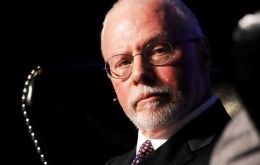
Elliott Management Corp., a New York-based hedge fund that invested in distressed Argentine government bonds well over a decade ago, will have made a $2.4 billion profit on its wager once this week's settlement is finalized, the Wall Street Journal said.
-
Friday, March 4th 2016 - 06:49 UTC
French president wants UK in the EU and warns of the consequences of leaving
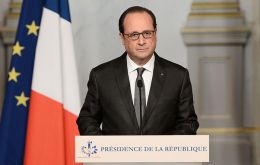
French President Francois Hollande has said he wants the UK to stay in the EU - and warned of the “consequences” for immigration and the economy of leaving. A French government minister earlier suggested his country could end UK border controls in Calais.
-
Thursday, March 3rd 2016 - 05:27 UTC
Petrobras loses tax case; discussing sale of assets in Argentina to Pampa Energia
Brazil's state-run oil company Petrobras may be forced to pay 7.3 billion Reais (US$1.9 billion) in back taxes and fines after a decision by the country's tax authority Carf, newspaper Valor Economico reported on Wednesday.
-
Thursday, March 3rd 2016 - 05:22 UTC
Brazil will allow foreign companies to hold a 49% stake in the country's airlines
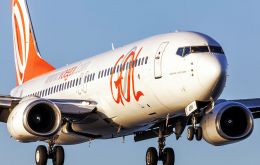
The government of President Dilma Rousseff has raised from 20% to 49% the maximum stake that foreign companies can hold in Brazilian airlines, according to an executive order signed by the president and published on Wednesday in the Diario Oficial, Official Gazette
-
Thursday, March 3rd 2016 - 05:11 UTC
EU top official expected in Argentina to bolster Mercosur/EU trade negotiations
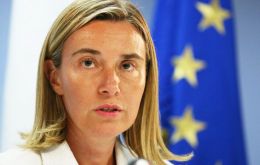
Argentine president Mauricio Macri is scheduled to receive in a week's time the European Union head of foreign affairs, Federica Mogherini who is expected to announce that all is ready to begin, next April, formal negotiations for the long-delayed trade and cooperation agreement between Mercosur and the EU.
-
Thursday, March 3rd 2016 - 05:03 UTC
Brazil leaves key interest rate unchanged at 14.25% for the fifth time running
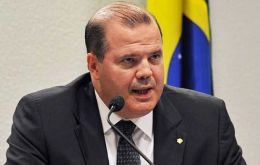
Brazil's central bank kept interest rates on hold on Wednesday as widely expected, opting to avoid inflicting more harm on an economy mired in its worst recession in decades despite a surge in inflation. In a split vote, the bank's monetary policy committee, Copom, kept its benchmark Selic rate at 14.25% for the fifth straight time.
-
Thursday, March 3rd 2016 - 04:57 UTC
Griesa lifts injunctions: 'Argentina needs time to raise money to pay creditors'
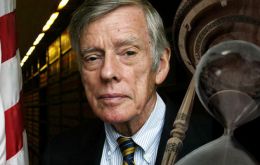
A judge sided with Argentina in its debt standoff on Wednesday, agreeing to let orders protecting creditors expire so that large U.S. hedge funds and smaller entities and people can be paid at least US$6.2 billion to satisfy settlements reached over the last month.
-
Wednesday, March 2nd 2016 - 22:39 UTC
Brazil posts trade surplus in February, as imports plummet with a weak Real
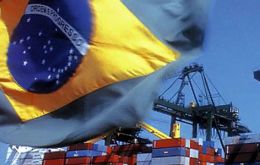
Brazil posted a $3.04 billion trade surplus in February, the Trade Ministry said on Tuesday. Brazil exported $13.3 billion last month and had imports of $10.3 billion.Analysts are expecting a $40 billion trade surplus for 2016, according to a central bank survey released Monday.
-
Tuesday, March 1st 2016 - 07:55 UTC
Chinese injects liquidity and helps boost volatile stock markets
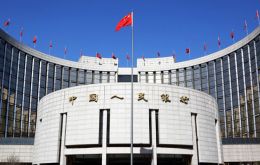
Chinese shares traded higher on Tuesday morning after a fresh stimulus push from the central bank to boost liquidity. The mainland benchmark Shanghai Composite rose 0.3% to 2,696.96 points.

