MercoPress. South Atlantic News Agency
Politics
-
Saturday, November 19th 2011 - 05:44 UTC
Greece submits austerity budget, but political differences surface in coalition
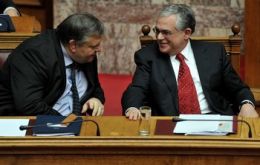
Greece's new government took a first step on Friday towards meeting terms of an international bailout needed to avoid bankruptcy, submitting a budget bill that foresees no new austerity measures next year as long as reforms are enacted.
-
Friday, November 18th 2011 - 21:46 UTC
Brazilian president Rousseff sanctions Truth Commission and Data access bills
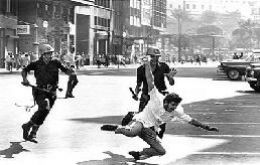
Brazilian president Dilma Rousseff on Friday signed into law the creation of a commission to investigate human rights abuses committed during military dictatorships with the purpose of strengthening democracy but ‘leaving aside all forms of revenge’.
-
Friday, November 18th 2011 - 21:27 UTC
CFK calls for a national ‘intellectual sovereignty’ commitment and ‘the 2003 model’
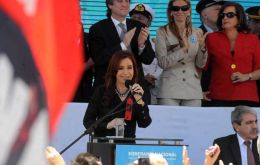
President Cristina Fernández urged Argentines ”to make an effort to understand the moment the country and the world are undergoing” while heading a ceremony to commemorate the 160th anniversary of the Vuelta de Obligado battle in the Buenos Aires area of San Pedro.
-
Friday, November 18th 2011 - 06:14 UTC
Brazilian leader recommends President Rousseff to “purge” her cabinet
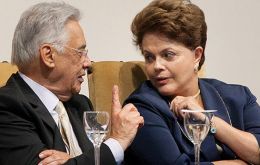
Former Brazilian president Fernando Henrique Cardoso recommended President Dilma Rousseff a purge of her cabinet which faces yet another alleged corruption case: the minister of Labour, the fifth since she took office last January.
-
Friday, November 18th 2011 - 05:38 UTC
Euro confidence crisis has several countries under siege
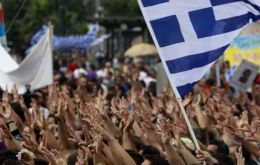
Greek police clashed with anti-austerity protesters and Italy announced sweeping reforms in response to a European debt crisis that on Thursday pushed borrowing costs for France and Spain sharply higher.
-
Friday, November 18th 2011 - 05:27 UTC
Peugeot and GM Argentina promise not to remit dividends for two years

The French auto consortium Peugeot-Citröen agreed with the Argentine government not to remit earnings during two years (2011/2012), approximately 50 million dollars announced Argentine government sources.
-
Thursday, November 17th 2011 - 22:15 UTC
Italian cabinet receives ample Senate confidence vote; Monti outlines program
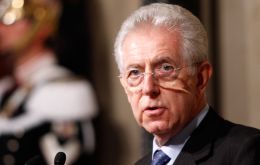
New Italian PM Mario Monti's government of technocrats passed its first test, winning a vote of confidence in the senate late Thursday. As expected, the government won the vote in the upper house of parliament easily, by 281 votes to 25.
-
Thursday, November 17th 2011 - 20:08 UTC
Colombian president tells new FARC leader: turn in or risk death
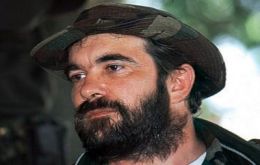
Colombian President Juan Manuel Santos warned the new FARC rebel chief ‘Timochenko’ to reconsider waging war or risk the same fate as his predecessor, who was shot dead by Special Forces this month.
-
Thursday, November 17th 2011 - 19:56 UTC
Germany and France clash over a greater role for the European Central bank
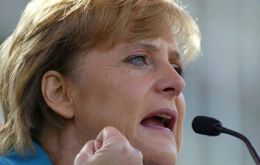
German Chancellor Angela Merkel reiterated Thursday her opposition to a greater role for the European Central Bank in helping to solve the Euro zone debt crisis, saying political action was required.
-
Thursday, November 17th 2011 - 19:07 UTC
Non-white, the majority population in the ‘racial democracy’ of Brazil
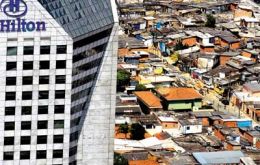
For the first time, non-white people make up the majority of Brazil's population, according to preliminary results of the 2010 census. Out of around 191m Brazilians, 91 million identified themselves as white, 82m as mixed race and 15m as black.

