MercoPress. South Atlantic News Agency
Argentina
-
Tuesday, March 22nd 2016 - 15:38 UTC
Argentine runner wins Falklands' Standard Chartered marathon in record time

An Argentine long distance runner has won the Falkland Islands “Standard Chartered Stanley Marathon” which is officially the World's Most Southerly AIMS-Certified Marathon. Rafael Lencina from the northern province of Tucuman completed on Sunday the 26 miles in 2 hours 35 minutes and 34 seconds, which is also a new record for the competition.
-
Saturday, March 19th 2016 - 09:13 UTC
Brazilian situation shows division among Unasur members

Unasur, the Union of South American Nations is divided on how to address the Brazilian situation: while Uruguay, Venezuela, Ecuador and Bolivia have agreed on a strong statement in support of president Dilma Rousseff, Argentina expressed 'institutional support' and Chile abstained.
-
Saturday, March 19th 2016 - 05:54 UTC
Argentina concerned about Brazilian political situation's impact on bilateral trade

The Argentine government expressed its concern about the impact the Brazilian political crisis will have on trade between the two countries. Argentina and Brazil are the principal partners in the Mercosur common market, which also includes Paraguay, Uruguay and Venezuela. Brazil and Argentina are mutually principal destinations for their manufactured goods, meaning that bilateral trade is crucial for both.
-
Saturday, March 19th 2016 - 05:41 UTC
Praise for Obama's decision to declassify documents from the Argentine dictatorship

There is no doubt about the participation of the United States in Argentina’s bloody 1976-1983 military dictatorship, Human Rights Secretary Claudio Avruj said in Buenos Aires following the news that Washington announced it will declassify military and intelligence files from the Dirty War period ahead of Barack Obama’s visit to the country.
-
Saturday, March 19th 2016 - 05:31 UTC
Evita Peron's 1951 Cadillac official limousine to be auctioned in England
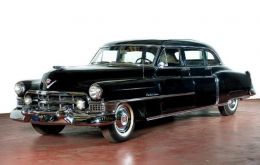
A 1951 Cadillac which was Argentina's charismatic leader Evita Peron official limousine will be auctioned on Sunday 20 March by Bonhams at Chichester, southern England. The going price for the black classic, which was also used by Evita´s husband, three times Argentine president Juan Domingo Peron, is estimated at between 120.000 and 150.000 Euros.
-
Friday, March 18th 2016 - 05:40 UTC
Obama should fully reveal documents from Argentina's 1976/1983 dictatorship and the US role, says NYT
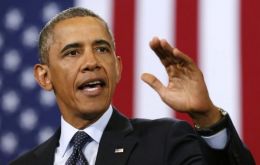
The New York Times published on Thursday an editorial in which the newspaper referred to president Barack Obama’s visit to Argentina next week and the role played by the United States in the country’s 1976-1983 civil-military dictatorship, saying the president of that country “should make a pledge that Washington will more fully reveal its role in a dark chapter of Argentine history.”
-
Friday, March 18th 2016 - 03:03 UTC
It's official: Mercosur and EU will exchange offers for a trade accord on 8 April

Argentina is willing to “make concessions” in order to move forward with a free-trade agreement between Mercosur and the European Union (EU), which will likely allow a greater export of agricultural produce, according to Argentina's Trade Secretary Miguel Braun who then reveled that trade offers will be exchanged on April 8.
-
Thursday, March 17th 2016 - 06:01 UTC
Falklands' oil industry making steady advance 'with positive signs from Argentina', says GlobalData
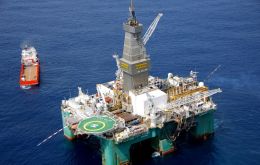
Falkland Islands' oil and gas industry is making steady advancement in spite of global concerns about falling prices, according to new analysis by GlobalData. With positive signs coming from the neighboring Argentina, which recently witnessed a change in government, the Falklands is preparing to commercialize production of its first oil project, Premier Oil's Sea Lion.
-
Wednesday, March 16th 2016 - 17:29 UTC
Judge Griesa sends strong message of support for Argentina at crucial moment

As the Argentine congress started to debate an end to the 15-year litigation, United States District Judge Thomas Griesa sent a new message of support to Argentina by claiming he won’t allow any attempts to seize the funds to be used by Argentina to pay the holdout creditors.
-
Wednesday, March 16th 2016 - 17:15 UTC
Argentine Senate begins consideration of debt 'normalization' bill following approval by Lower House
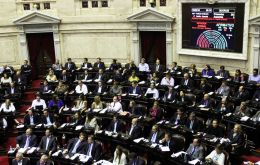
The administration of president Mauricio Macri overcame a first hurdle in the Argentine congress to have its “debt normalization” bill approved, which should help bring to an end years of litigation with the holdout funds and open access to global money markets in normal conditions.