MercoPress. South Atlantic News Agency
Economy
-
Thursday, May 22nd 2014 - 01:01 UTC
Uruguay reported a trade deficit of 1.38bn dollars in the twelve months to April

Uruguay’s goods’ foreign trade in the twelve months to April 2014 reported a deficit of 1.38 billion dollars with exports totaling 10.42 billion and imports 11.185bn, according to the country’s Chamber of Industries Economic Studies Unit based on data from Customs.
-
Thursday, May 22nd 2014 - 00:46 UTC
Russia's Weakened Hand Could Pay Off For Beijing In Major Gas Deal
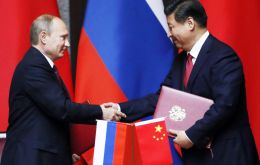
A major gas deal between Russia and China was finally sealed this week when Russian President Vladimir Putin was on a two day visit to China on May 20-21 and met with President Xi Jinping. In the lead up to Putin's arrival, the two sides have been working on putting the finishing touches on a 30-year contract for a gas deal a decade in the making, and Russian officials have suggested that the deal will be completed by Putin's arrival.
-
Thursday, May 22nd 2014 - 00:40 UTC
Bernanke now makes more money speaking to bankers than in one year as Fed chairman
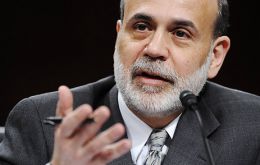
The former chairman of the Federal Reserve Ben Bernanke, who during eight years piloted the world’s largest economy through the worst financial and economic crisis since the Depression of last century, is now reaping the fruits of his success.
-
Thursday, May 22nd 2014 - 00:31 UTC
Fed minutes confirm a retreat from easy monetary policy; concerns regarding job creation

Federal Reserve policymakers last month began laying groundwork for an eventual retreat from easy monetary policy with a discussion of how to best control interest rates as they remove trillions of dollars from the financial system.
-
Tuesday, May 20th 2014 - 19:35 UTC
Falklands visited by Punta Arenas experts in ports, logistics and shipping

A group of managers representing Punta Arenas port facilities, logistic companies and shipping companies visited the Falkland Islands last week with an ultimate aim to offer solutions to the current and future commercial needs of the Islands.
-
Tuesday, May 20th 2014 - 09:45 UTC
Joint global efforts to stop IUU fishing
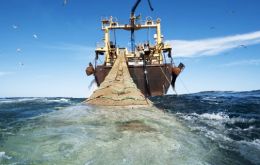
International Seafood Sustainability Foundation (ISSF) president Susan Jackson considers the improvement of vessel registration schemes and the eradication of illegal, unreported and unregulated fishing (IUU) activities should be the top priority for all ocean conservation organizations.
-
Tuesday, May 20th 2014 - 08:42 UTC
Rousseff announces 70bn dollars for Brazilian agriculture at 6.5% interest

President Dilma Rousseff announced Monday that the government will make available to Brazil's farmers and ranchers a 156.1 billion Reais (70.5 billion dollars) credit line, a hike of 14.7% over the previous season.
-
Tuesday, May 20th 2014 - 08:33 UTC
Credit Suisse pays 2.6bn dollars fine for helping US clients avoid taxes

The Swiss banking giant Credit Suisse has pleaded guilty to helping some US clients avoid paying taxes to the US government and agreed to pay a 2.6bn fine. It is the biggest bank to plead guilty to criminal charges in the US in more than 20 years.
-
Monday, May 19th 2014 - 13:54 UTC
People living longer, both in rich and poor countries, says latest WHO report
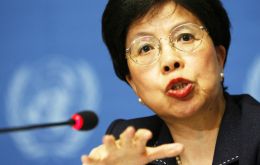
People everywhere are living longer, according to the World Health Statistics 2014 published this week by the World Health Organization (WHO). Based on global averages, a girl who was born in 2012 can expect to live to around 73 years, and a boy to the age of 68. This is six years longer than the average global life expectancy for a child born in 1990.
-
Monday, May 19th 2014 - 09:09 UTC
ATT to acquire DirecTV for 48.5bn dollars; shareholders must approve

US telecommunications firm AT&T will acquire satellite television provider DirecTV in a cash and stock deal valued at $48.5bn (£29bn). If approved, the deal gives AT&T access to DirecTV's 40 million digital TV customers in the US and Latin America.

