MercoPress. South Atlantic News Agency
Mercosur
-
Tuesday, June 23rd 2015 - 07:43 UTC
Uruguay and Paraguay meet to talk about Mercosur, ports and energy

Mercosur, ports, energy, trade are among the issues in the agenda that Paraguayan president Horacio Cartes will consider with his counterpart Tabare Vazquez when he makes a one day visit on Thursday to Montevideo, according to the Uruguayan ambassador in Asunción Federico Perazza, ahead of the meeting.
-
Thursday, June 18th 2015 - 07:08 UTC
Mercosur/EU hope 'for positive news in third quarter' despite members' domestic problems
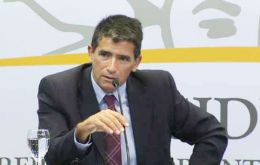
The European Union also has difficulties in completing a draft proposal of goods and services to exchange with Mercosur in the search for a long delayed trade agreement between the two blocks, revealed Uruguayan vice-president Raul Sendic during a report to the Senate on his recent 10/11 June trip to Brussels for the Celac/EU summit. However in “the third quarter of the year there should be positive news”.
-
Friday, June 12th 2015 - 05:05 UTC
Rousseff denies being upset with Argentina over Mercosur and trade policies
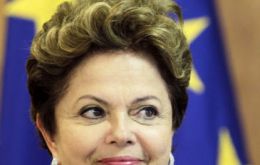
Brazilian President Dilma Rousseff stated on Thursday in Brussels she was not upset by differences with Argentina over the trade agreement Mercosur is to sign with the European Union, despite president Cristina Fernandez administration's cold feet on the issue.
-
Thursday, June 11th 2015 - 04:13 UTC
Timerman waters down Mercosur/EU agreement expectations
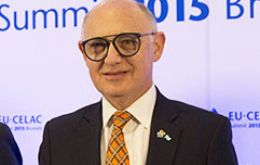
Argentine Foreign minister Hector Timerman affirmed that a trade deal would not be signed between Mercosur and the European Union (EU) in the second summit of the Community of Latin American States (CELAC) and the European body, which is taking place in the Belgian city of Brussels.
-
Thursday, June 11th 2015 - 00:41 UTC
Mercosur ready to deliver its proposal for the trade agreement with EU
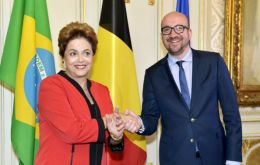
Mercosur is ready to deliver its proposal on goods, services and tariff reductions as part of the negotiations with the European Union for a trade and cooperation agreement, said Brazilian president Dilma Rousseff on Wednesday, following a meeting in Brussels with Charles Michel, Belgium's Prime minister.
-
Thursday, June 11th 2015 - 00:29 UTC
Bolivia's Morales does not support Mercosur/EU deal based on 'competitive' trade
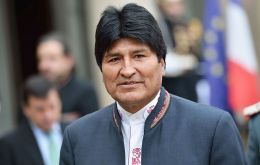
Bolivian president Evo Morales said that if Mercosur insists in forging a trade agreement with the European Union, Bolivia will have to 'withdraw“, because ”we support solidarity and not competitive trade”. Morales is in Brussels attending the EU/Celac heads of government and state summit which takes off on Thursday.
-
Wednesday, June 10th 2015 - 06:53 UTC
Uruguay says Brazil and Paraguay are ready to sign trade accord with Europe
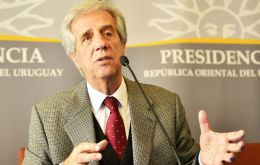
Uruguayan president Tabare Vazquez said that Uruguay, Brazil and Paraguay are ready to sign the long delayed trade and cooperation agreement between Mercosur and the European Union. Such an agreement has become one of the cornerstones of Vazquez presidency faced with falling exports and limited markets.
-
Tuesday, June 9th 2015 - 08:20 UTC
Brazil determined to advance Mercosur/EU trade talks in this week's meeting
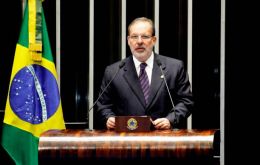
A top Brazilian minister said that Mercosur must allow member countries to sign trade agreements with third parties and called for the end to the rule which prevents such initiative. Development, Industry and Trade minister Armando Monteiro Neto made the statement during a competitiveness seminar in Rio do Janeiro a couple of days ahead of a crucial meeting in Brussels between Mercosur representatives and the European Union to address an encompassing free trade agreement.
-
Monday, June 8th 2015 - 09:11 UTC
Uruguay's vice-president travels to Brussels to advance Mercosur/EU trade talks
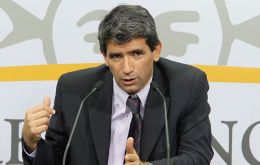
Uruguay's vice-president Raúl Sendic and Foreign minister Rodolfo Nin Novoa will be attending this week's summit of EU and Celac leaders scheduled in Brussels, which will also address in the sidelines, current EU/Mercosur negotiations for a wide ranging trade agreement.
-
Saturday, May 30th 2015 - 10:03 UTC
Mercosur/EU officials will assess trade talks in Brussels on 11 June
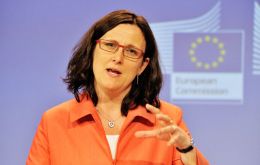
Mercosur foreign ministers will be meeting in June with the European Union Trade Commissionaire Cecilia Malmstrom to 'assess' the current negotiations for a comprehensive trade and cooperation agreement. The meeting in Brussels will be on the sidelines of the EU-Celac (Community of Latin American and Caribbean States) summit, the first at ministerial level since January 2013