MercoPress. South Atlantic News Agency
Mercosur
-
Friday, December 23rd 2011 - 14:44 UTC
Buenos Aires only accepts one outcome of talks: “turning Falklands into an Argentine colony”
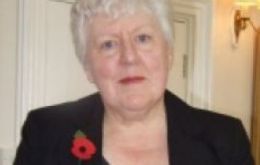
Following the article published in “The Independent” dated 22nd December 2011, entitled “Time to talk about the Falklands”, the people of the Falkland Islands would like to make the following response.
-
Friday, December 23rd 2011 - 14:42 UTC
Shout it loud enough and even the good guys believe it

By John Fowler for Penguin News, Stanley, Falkland Islands - My first contact with Latin America came in 1971, when my wife and I spent four days in Montevideo while waiting for a ship to carry us to the Falkland Islands. We received such amazing hospitality and kindness from the Uruguayans we met then, that this small, but perfectly-formed country has had a place in my heart ever since.
-
Friday, December 23rd 2011 - 14:37 UTC
Uruguay criticizes Mercosur for shortcomings in trade and infrastructure
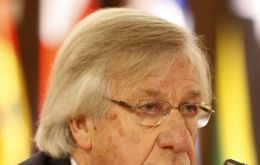
One day after the summit in Montevideo, Uruguay criticized the functioning of Mercosur, particularly the lack of cooperation, trade barriers and impediments and delays to essential infrastructure works for the group.
-
Friday, December 23rd 2011 - 05:32 UTC
The Independent: “Time to talk about the Falklands”

In an Opinion piece, “Time to talk about the Falklands”, The Independent suggests the time might have come to defuse the situation in the South Atlantic and take up last year’s offer from US Secretary of State Hillary Clinton to broker between Britain and Argentina.
-
Friday, December 23rd 2011 - 04:39 UTC
“We can never accept the Argentine government’s challenge to Falklands self-determination”

“We will always maintain our commitment to you on any question of sovereignty because your right to self-determination is the cornerstone of our policy”, said British Prime Minister David Cameron in his Christmas message to the Falkland Islands.
-
Friday, December 23rd 2011 - 04:38 UTC
Relation of organized labour with Argentine government, “suspended, not broken”

Argentina’s CGT Labour Confederation leader Hugo Moyano stated on Thursday that, “our relationship with the Government is not broken, just suspended as the President (Cristina Fernandez) wishes,” during a press meeting with international news correspondents.
-
Friday, December 23rd 2011 - 04:36 UTC
UK Defence denies London press rumours of a Falklands military build-up
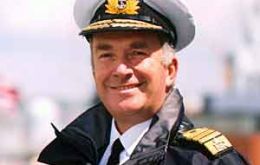
After statements published by the English newspaper “The Daily Mail,” in which the former head of the Navy, Lord Alan West, said that a nuclear submarine should be sent to the Malvinas Islands, the United Kingdom assured it does not plan to increase the military presence in the Islands.
-
Thursday, December 22nd 2011 - 21:02 UTC
Hague and Almagro to discuss Falklands’ flagged vessels restrictions on Friday

Britain’s Foreign Secretary William Hague and Uruguay’s Foreign Affairs minister Luis Almagro will discuss the Falklands/Malvinas flagged vessels issue on Friday according to a release from the British embassy in Montevideo
-
Thursday, December 22nd 2011 - 21:00 UTC
Argentina will have an ambassador in London next year, says Cristina Fernandez

“Very soon we are going to have an ambassador in the United Kingdom” announced Argentine president Cristina Fernandez. The post has remained vacant since 2008 and the announcement comes in the midst of a new round of the ongoing dispute with the UK over the Falklands and other South Atlantic Islands sovereignty.
-
Thursday, December 22nd 2011 - 20:59 UTC
Uruguay Navy says there is no legal impediment for Falklands’ flagged vessels to operate in Montevideo
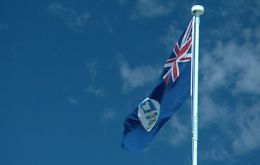
A report from the Uruguayan Coast Guard argues there is no legislation impeding Falklands/Malvinas flagged vessels from operating in the port of Montevideo. The report was handed to the Uruguayan Ministry of Foreign Affairs which is drafting a protocol regarding what ships can and which can’t access Uruguayan ports.