MercoPress. South Atlantic News Agency
Mercosur
-
Tuesday, August 30th 2011 - 03:53 UTC
Uruguay plan to regularize 676 shanty towns (200.000 people), most in Montevideo

Uruguay announced it will invest 150 million dollars for the eradication of shanty towns, 90% of which are located in Montevideo, half of them in contaminated and flood-prone areas.
-
Tuesday, August 30th 2011 - 03:50 UTC
Landslide victory for CFK close ally in the province of Tucuman
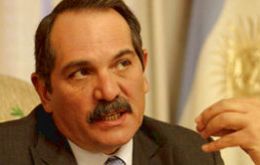
A close ally of President Cristina Fernandez de Kirchner, Tucuman province governor Jose Alperovich won on Sunday a landslide third straight mandate and his first words were of gratitude and remembrance for Nestor Kirchner.
-
Tuesday, August 30th 2011 - 03:49 UTC
Buenos Aires City mayor admits CFK is ‘almost unbeatable’; looks for better relations

Buenos Aires City Mayor, Mauricio Macri, admitted on Monday that it is “almost impossible” to beat President Cristina Fernández de Kirchner in October’s presidential elections.
-
Tuesday, August 30th 2011 - 03:44 UTC
Chilean judge investigating Carabineros over killing of student

An officer from Chile’s gendarmerie-police, Carabineros was asked to resign Monday after admitting to using his firearm in the Macul borough of Santiago near where 16-year-old Manuel Gutiérrez Reinoso was shot and killed Thursday night.
-
Tuesday, August 30th 2011 - 03:42 UTC
Business leaders and organized labour ignore Argentina’s official inflation index

Following the agreement which raised the Argentine minimum wage by 25%, equivalent to 549 dollars per month, business leaders and representatives from the labour unions admitted that when it comes to salaries negotiations the official inflation index from the government statistics office, Indec, “is not taken into account”.
-
Tuesday, August 30th 2011 - 03:39 UTC
Argentina expects another car production record next year: a million units

The Argentine automobile industry will expand its production capacity to a million units annually by 2012 following on the expected record production of 840.000 this year boosted by domestic demand and exports to brazil, said Anibal Borderes president of the country’s Automobile Manufacturers Association, Adefa.
-
Monday, August 29th 2011 - 08:34 UTC
Brazil loosing industry to Mercosur members with cheaper costs and lower taxes
Brazilian business and manufacturing leaders are demanding a “fiscal harmonization” of the Mercosur block since other full members are attracting a growing number of Brazilian companies to those countries lured by cheap energy and qualified labour.
-
Friday, August 26th 2011 - 03:26 UTC
“Chavez’ Venezuela has no chance of joining Mercosur” says Paraguay Congress
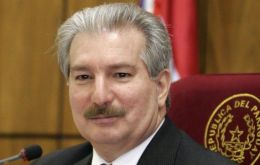
Paraguay’s vote in support of Venezuela’s full integration to Mercosur seems more distant than ever as was confirmed by the country’s Senate Foreign Relations committee to Brazilian ambassador Eduardo Dos Santos.
-
Friday, August 26th 2011 - 03:22 UTC
Mercosur/Israel trade deal comes into effect following Argentina’s signature

A free trade agreement between Israel and Argentina is set to come into effect on September 9, the Israeli Industry, Trade and Labour Ministry announced this week.
-
Monday, August 22nd 2011 - 07:32 UTC
In spite of global crisis, leading Spanish bank optimistic about Latam outlook

In spite of world turbulences the Latin America economy will expand 4.8% in 2011 and 4% in 2012 and 2013 boosted by the high price for commodities and strong domestic demand, according to the Spanish bank BBVA, on its “Latinamerica report”.