MercoPress. South Atlantic News Agency
Tag: Mauricio Macri
-
Thursday, September 6th 2018 - 08:40 UTC
IMF receptive to Argentina's request, but now Macri must implement the hard austerity program
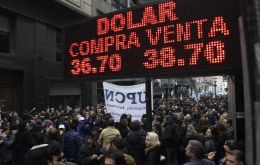
Argentina’s economy minister sounded upbeat on Wednesday about clinching a new deal with the International Monetary Fund after two days of talks in Washington, and said had sought U.S. support for securing approval from the IMF’s board.
-
Wednesday, September 5th 2018 - 08:16 UTC
Argentine Peso slid another 2.18% and the Central bank sold US$ 350 million in reserves
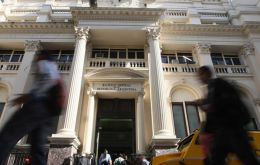
Argentina’s peso slid further on Tuesday as investors reacted with skepticism to president Mauricio Macri’s plans. Many worry he will not be able to push reforms through a restive Congress amid growing frustration on the streets of Buenos Aires.
-
Wednesday, September 5th 2018 - 07:30 UTC
Argentina/IMF discussions continue this Wednesday; strong support from Trump

Argentina “made progress” on Tuesday in talks with the International Monetary Fund aimed at securing an accelerated disbursement of a US$50 billion loan it hopes will calm its debilitating economic crisis.
-
Tuesday, September 4th 2018 - 08:41 UTC
Brazil's Real and Argentina's Peso slumped on Monday
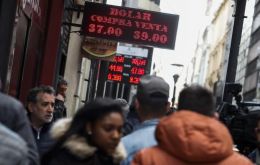
The Brazilian Real slumped on Monday as mounting concerns over this year's presidential election added to global risk aversion, while the Argentine peso extended a recent sell-off that also spread into stock markets in Latin America.
-
Monday, September 3rd 2018 - 19:17 UTC
Macri admits the seriousness of the situation and Dujovne is off to meet with IMF
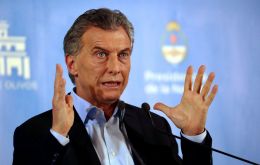
President Mauricio Macri unveiled plans on Monday to raise export taxes on grains and slash the number of government ministries in a bid to balance its budget next year, as Argentina seeks a deal with the IMF to accelerate a US$ 50 billion standby loan program.
-
Monday, September 3rd 2018 - 09:25 UTC
Argentina's efforts to regain confidence: cutting number of ministries and taxes on farm exports

Argentina is drafting plans to cut its budget deficit to convince nervous investors it can pay its debts and this Monday Finance minister Nicolas Dujovne is scheduled to announce measures, before traveling to Washington to meet with IMF's chief Christine Lagarde.
-
Saturday, September 1st 2018 - 09:27 UTC
S&P places Argentina credit ratings under review
S&P said on Friday it may lower Argentina's long-term foreign currency rating from its current B+ grade, which is four notches below investment grade -- and on par with Turkey, Greece and Fiji. The ratings company cited the risk of worsening creditworthiness and exchange rate volatility as potential threats to the economic adjustment measures undertaken by Mauricio Macri’s administration.
-
Saturday, September 1st 2018 - 07:46 UTC
IMF strong support helps stabilize Argentine Peso; Macri preparing new economic package
Argentina’s beleaguered peso stabilized on Friday as the central bank said it would auction a large amount of dollar reserves, and the International Monetary Fund (IMF) issued a strong statement of support for President Mauricio Macri’s government.
-
Friday, August 31st 2018 - 07:43 UTC
Argentine peso plummets and central bank raises interest rate to 60%
The Argentine Peso plummeted 15.6% to a new record on Thursday, and ended trading at 39.87 after having reached almost 42 Pesos to the US dollar in mid afternoon. This follows on the Wednesday which also witnessed the Argentine currency slide 7% to the greenback.
-
Thursday, August 30th 2018 - 09:11 UTC
Macri addresses the nation; IMF pledges more support but Peso falls 7%, a record 34 to the US dollar
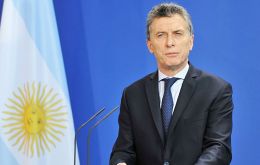
Argentina's Peso suffered its biggest one-day slide in almost three years on Wednesday after the central bank sold reserves for a second straight day and the president asked the International Monetary Fund for early release of standby funds.