MercoPress. South Atlantic News Agency
Latin America
-
Wednesday, November 28th 2012 - 00:07 UTC
In the midst of regional elections Chavez returns to Cuba to continue cancer treatment
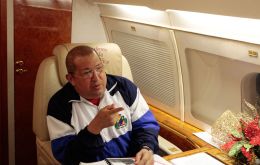
Venezuelan President Hugo Chavez said he is returning to Cuba on Tuesday to continue treatment for cancer, raising new questions about his health just weeks after he won re-election to another six-year term.
-
Tuesday, November 27th 2012 - 23:52 UTC
Peruvian president tells Argentine congress of its solidarity with the Malvinas issue
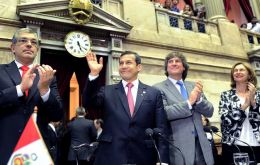
Peruvian president Ollanta Humala expressed solidarity with Argentina in the Malvinas Islands issue and said that “the problems of the region are common problems” for all countries.
-
Tuesday, November 27th 2012 - 22:54 UTC
Argentina will make a plea at the Unasur summit to jointly face ‘vulture funds’
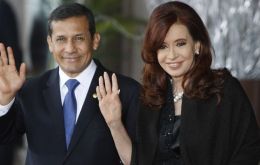
During a ceremony to receive visiting Peruvian leader Ollanta Humala Argentine President Cristina Fernández said that she would make a plea for Unasur members to come together in the fight against ‘vulture funds’ (hedge funds) when the region’s leaders meet this week in Lima.
-
Monday, November 26th 2012 - 22:57 UTC
Bolivian plans to belong to CAN and Mercosur face several hurdles
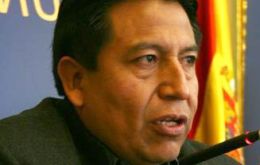
Foreign minister David Choquehuanca argued that Bolivia can become a full member of Mercosur and continue with the Community of Andean Nations, CAN, and can’t be forced to abandon a block to join another.
-
Saturday, November 24th 2012 - 15:42 UTC
Unasur envoy leaves with “a good impression” of the Paraguay electoral process
Unasur special envoy Salomon Lerner said he returns to Peru with “a good impression” of the Paraguayan electoral process and the overall situation of the country.
-
Friday, November 23rd 2012 - 23:41 UTC
‘Business climate’ up in Latam; lack of competitiveness and skilled labour remain challenges

Brazil, Bolivia and Chile had the best ‘business climate’ in Latin America during October according to the Economic Climate Index, ICE from the Brazilian think-tank Getulio Vargas Foundation, FGV.
-
Friday, November 23rd 2012 - 23:20 UTC
Mujica calls for prudence with salaries: “look at what is happening on the other side (Argentina)”
Uruguayan president Jose Mujica appealed to workers and entrepreneurs to avoid an escalation of salaries and prices which leads “to all sort of fiddling” as is happening in Argentina.
-
Thursday, November 22nd 2012 - 14:50 UTC
Argentina’s outbursts backfire: Judge Griesa orders payment to holdout bond investors
Argentina suffered a stinging blow late Wednesday when New York federal judge Thomas Griesa, citing threats by the country's leaders to defy his rulings in a decade-old dispute over defaulted sovereign bonds, ordered immediate payment.
-
Thursday, November 22nd 2012 - 13:55 UTC
Bolivia formally invited to join Mercosur as full member at December’s summit
Bolivia was formally invited to join Mercosur as a full member for which negotiations can begin in the coming summit December 7 in Brasilia. The invitation was made official by Mercosur High Commissioner Ivan Ramalho during a visit to La Paz where the met with Foreign minister David Choquehuanca and Economy and Planning ministers Luis Arce and Viviana Caro.
-
Wednesday, November 21st 2012 - 08:03 UTC
Chile reopens market for Paraguayan beef after a twelve-month ban
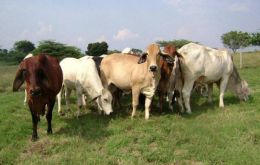
Chile has re-opened its market to Paraguayan beef announced on Tuesday to his peers Sixto Miranda, head of the country’s Rural Society, following a meeting with Foreign Minister Jose Fernandez Estigarribia.

